

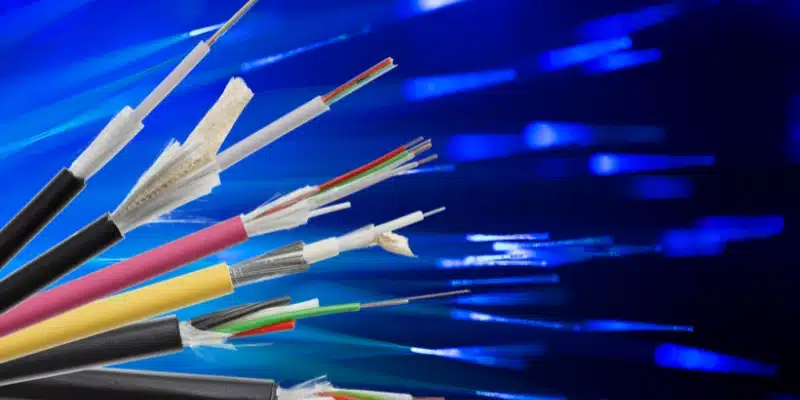
The global demand for digital data has grown exponentially, fueled by continuous internet connectivity across residential, commercial, and industrial sectors. As legacy systems struggle to keep pace with modern data requirements, fiber optic technology stands as the definitive backbone of global telecommunications. By transmitting data as light pulses through microscopic strands of glass, fiber optics provide unparalleled speed, bandwidth, and structural reliability.
However, the current iteration of fiber technology is only the baseline for what is to come. As societal dependencies shift toward real-time computing, immersive environments, and highly automated industries, the underlying physical infrastructure must undergo a profound evolution. The future of fiber optic internet lies in revolutionary physics, advanced hardware engineering, and a total reconfiguration of how light moves across global networks.
Architectural Upgrades: Breaking the Capacity Crunch
Traditional fiber optic cables rely on single-core standard single-mode fibers. While highly efficient, these lines are rapidly approaching their theoretical transmission limit, known in engineering circles as the nonlinear Shannon limit. To prevent a catastrophic capacity crunch, telecommunications researchers are developing alternative glass architectures that multiply data throughput without requiring the physical excavation of entirely new trench networks.
Space-Division Multiplexing and Multi-Core Fibers
The most promising development in structural fiber design is the transition from single-core to multi-core fibers. Instead of routing a single pathway of light through a glass strand, multi-core fibers feature multiple distinct glass cores bundled within the same exact outer cladding diameter. When paired with Space-Division Multiplexing, data streams can be transmitted simultaneously down these independent channels, effectively multiplying the total bandwidth capacity of a single cable line by ten to twenty times.
Hollow-Core Fiber Innovations
For decades, fiber optics have relied on solid silica glass cores. However, light actually travels roughly thirty-five percent slower through solid silica glass than it does through a vacuum. Hollow-core fibers resolve this physical limitation by replacing the solid glass center with an engineered air pocket or structural vacuum tube surrounded by intricate photonic crystal membranes. This allows the light pulses to travel at nearly the absolute speed of light in a vacuum, dramatically reducing latency and changing how time-sensitive applications function.
Technological Catalyst: Enabling Next-Generation Computing
The immediate benefits of future fiber deployments extend far beyond downloading consumer media faster. The structural optimization of fiber networks acts as the core enabler for the most critical computing revolutions of the modern era.
Real-Time Artificial Intelligence and Edge Compute Networks
Advanced artificial intelligence engines require massive, continuous datasets to execute split-second machine learning inferences. Standard cloud data centers often suffer from physical distance delays when routing this information. Future ultra-low latency hollow-core fiber lines allow for the creation of completely decentralized edge compute networks. This structural layout enables real-time AI processing for critical systems like autonomous vehicular traffic systems, remote surgical robotics, and predictive grid power management, where a millisecond delay can carry life-altering consequences.
Industrial Internet of Things and Smart Infrastructure
As manufacturing plants, logistics centers, and urban municipal frameworks integrate billions of active sensors, the sheer volume of data packets can overwhelm traditional copper or early-generation wireless backhauls. Future fiber optic infrastructure acts as a massive central nervous system. It seamlessly handles high-density data collection from smart cities, managing everything from automated water treatment monitoring to predictive railway maintenance metrics without experiencing systemic data packet loss or packet collision issues.
Beyond 5G: The Invisible Foundation of Wireless Networks
A common misconception in consumer technology is that wireless innovations like 5G, 6G, and satellite constellations will eventually render physical fiber optic cables obsolete. In reality, the exact opposite is true. The success of any wireless network depends completely on a robust, dense network of physical fiber lines running behind the scenes.
Cell Tower and Small Cell Backhaul Optimization
Wireless signals only travel through the air from a mobile device to the nearest cell tower or small cell radio node installed on a local utility pole. Once the signal strikes that antenna, it must be instantly converted into light and routed through a physical fiber optic backhaul network to reach the broader internet. As future wireless generations transition to higher frequency millimeter-wave spectrums, their broadcast range drops significantly, requiring tens of thousands of new small cells. Each of these small cells must be connected directly to high-speed fiber, making deep fiber penetration an absolute prerequisite for advanced wireless performance.
Satellite Ground Station Synchronization
Low-Earth orbit satellite constellations have expanded internet access to highly remote regions across the globe. However, these satellites do not operate as isolated networks. They must continuously beam data down to fixed terrestrial ground stations scattered across various continents. These ground stations require high-throughput, resilient fiber optic links to instantly redistribute that satellite data into the global internet grid, ensuring that even space-based communications remain tethered to fiber infrastructure.
Environmental and Structural Resilience
As climate volatility shifts global landscape profiles, future fiber infrastructure must be built to withstand extreme environmental stress while minimizing its ecological footprint.
Extreme Environmental Armor and Material Science
Modern fiber optic cables are being reinforced with advanced material compounds designed to survive extreme thermal fluctuations, deep marine pressure zones, and intense seismic disruptions. Researchers are utilizing flexible, self-healing polymer jackets that shield delicate glass cores from moisture intrusion and physical stress. Furthermore, integrated acoustic sensing technology allows fiber optic lines to double as real-time seismic monitors, detecting underground rock movements or oceanic pressure shifts before an earthquake or tsunami strikes.
Longevity and Energy Conservation
Fiber optic transmission is inherently more energy-efficient than traditional copper wiring. Copper relies on electrical currents that generate significant resistance and heat, requiring massive amounts of power to amplify signals over long distances. Fiber optics lose very little energy as light passes through glass, drastically reducing the number of signal repeaters and cooling systems needed across long-haul networks. This operational efficiency drastically lowers the carbon footprint of global data transmission hubs, making future fiber systems a highly sustainable asset.
Frequently Asked Questions
What is the practical difference between single-mode and multi-mode fiber optic cables?
Single-mode fiber features a very narrow core that allows only a single ray of light to propagate at a time, making it exceptionally efficient for transmitting data over massive distances without signal degradation. Multi-mode fiber features a much wider core that allows multiple light rays to travel simultaneously at different angles, which is highly efficient for short-distance local area networks like corporate offices or localized campus data centers.
How do future fiber optic networks compare to current satellite internet providers?
Terrestrial fiber optic networks offer significantly higher bandwidth caps, superior data security, and vastly lower latency profiles than satellite configurations. While satellite internet is highly beneficial for reaching isolated geographic areas where laying physical cables is financially impossible, fiber remains the preferred option for high-density urban environments and data-heavy industries that cannot tolerate atmospheric interference or signal delay.
What physical factors cause signal loss or degradation in fiber optic lines?
Signal degradation, or attenuation, in fiber optics is primarily caused by scattering and absorption inside the glass core. Light can strike microscopic imperfections in the silica material and scatter in unintended directions, or trace impurities can absorb the light energy entirely. Additionally, severe physical bending or improper splicing of the cable can cause light to leak out of the core, requiring the use of optical amplifiers over extended distances.
Is it possible to tap into or intercept data traveling through a fiber optic cable?
Intercepting data from a fiber optic line is exceptionally difficult and technically complex compared to traditional copper wiring. Tapping a fiber line requires physically bending or splicing the cable to intercept the light pulses, an action that immediately alters the light signal properties, drops the optical power, and triggers automated system alerts within the network monitoring software, exposing the security breach instantly.
Why is dark fiber considered an important asset for future enterprise businesses?
Dark fiber refers to physical fiber optic cables that have already been laid underground but are not yet connected to active optical electronics or transmitting data. Large enterprises and government institutions lease or purchase this unlit infrastructure to build completely private, secure networks, allowing them to install their own specialized hardware and scale their data bandwidth independently without relying on commercial internet service providers.
How does the cost of installing fiber optics compare to traditional copper infrastructure?
The initial capital expenditure for manufacturing and installing fiber optic cables is generally higher than copper due to the specialized equipment, precision splicing tools, and highly trained engineering labor required. However, over its operational lifecycle, fiber is significantly more cost-effective because it requires virtually no ongoing maintenance, consumes drastically less power, and possesses an almost infinite capacity for bandwidth upgrades by simply changing the electronic endpoints.
What role does wave-division multiplexing play in increasing internet speeds?
Wave-division multiplexing is a technology that allows network operators to transmit multiple distinct data streams over a single optical fiber strand simultaneously by utilizing different wavelengths, or colors, of laser light. By separating the data into distinct spectral channels, a single physical strand of glass can carry vastly more data without needing any modifications to the subterranean cable architecture.
Comments are closed.